
When trying to find the right eCommerce platform, you must have come across Shopify and BigCommerce. Every year, multiple eCommerce platforms are launched in the market, yet these two giants stay at the top.
Both of these biggest market players are good; however, their differences make them suitable for different business needs.
This guide is a deep dive into the whole Shopify vs BigCommerce debate. Let’s learn their pricing, features, ease of use, and other aspects to make an informed decision.
30-Second Summary
Shopify vs BigCommerce: A debate that confuses many people, particularly if they are just starting out their eCommerce business. In this guide, we discuss different aspects of these platforms with verdicts.
You will learn the comparison regarding
- Pricing
- Transaction Fees
- Sales and Marketing Features
- App Ecosystem
- Payment Gateways
- Ease of Use
- SEO and Scalability
- B2B eCommerce
- Checkout Customization
- Remote Store Management
- Multi-store Capability
- Pros and Cons, and
- Current Trends and Updates
What is Shopify?
Shopify is one of the biggest eCommerce website builders. In 2023, it had over 4 million active websites. By mid-2025, the number of active websites had increased to 5.5 to 5.6 million.
Many big names use this platform, such as PepsiCo, Heinz, Sephora, Nestle, Penguin Books, and Minecraft.
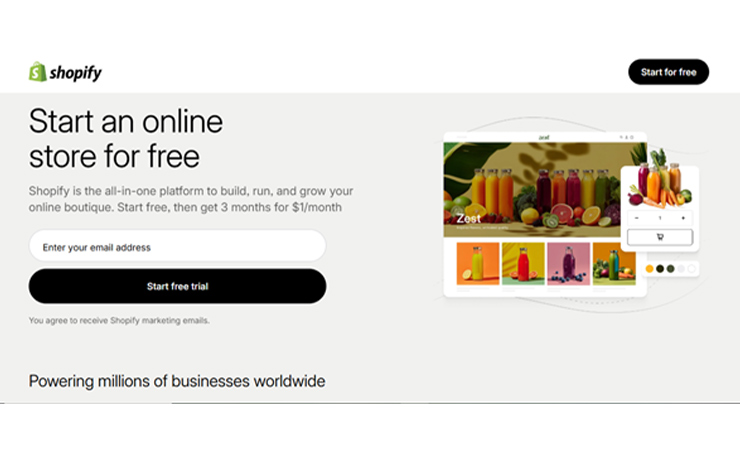
Shopify provides many features and apps that make managing your business website easier. Its low upfront cost, ease of setup, and customizable templates make it a helpful platform for many users.
What is BigCommerce?
BigCommerce is a SaaS (software-as-a-service) platform. It is used for building and managing eCommerce stores. It has more than 46,000 active stores.
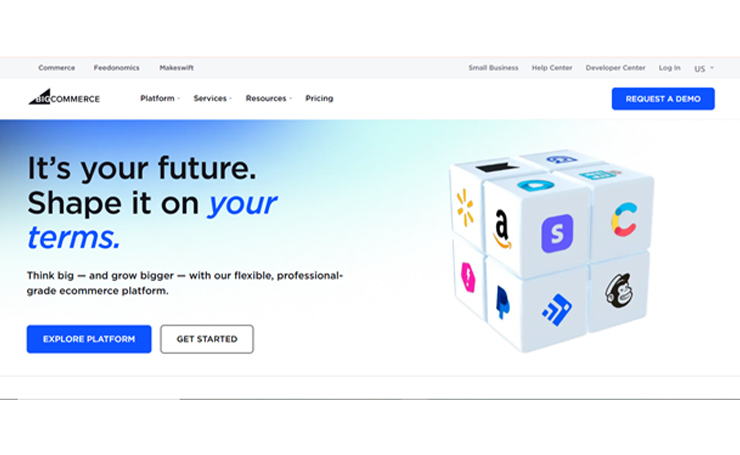
Store owners get a wide range of features at affordable prices. Many well-known companies use this platform, including Olay, One Kings Lane, GE Appliances, and Wired Italia.
Shopify vs BigCommerce Comparison at a Glance
| Feature | Shopify | BigCommerce |
| Ease of Use | The learning curve is very low. | The learning curve is a little steeper. |
| Built-in Features | Many advanced features, but fewer than BigCommerce | Comprehensive set of features |
| Pricing | Moderate plus app costs | Slightly higher but fewer add-ons |
| Transaction Fees | Yes (unless using Shopify Payments) | None |
| SEO Control | Good | Excellent |
| B2B Tools | App-based; strong on Shopify Plus | Native B2B Suite |
| Multi-Store | Limited (unless Plus) | Built-in multi-storefront |
| App Ecosystem | Largest on the market | Smaller but improving |
| Checkout Customization | Limited unless Plus | More flexible |
| Best For | Small businesses and brands | Growing, large, or B2B businesses |
Shopify vs BigCommerce Pricing
The difference between the pricing structures of both platforms lies in the features offered in each plan.

For instance, you get an abandoned cart recovery feature on Shopify in the Basic Plan, while you need to purchase the Plus Plan on BigCommerce to unlock this feature.
Shopify
Shopify offers four pricing tiers and a 3-day free trial. After completing it, you can choose from the following options.
- Basic: $39 per month
- Shopify: $105 per month
- Advanced Shopify: $399 per month
- Shopify Plus: starts around $2,300 per month
BigCommerce
BigCommerce also offers monthly subscriptions and a 15-day free trial. Users are automatically upgraded to the next pricing plan if their revenue reaches a certain threshold.
- BigCommerce Standard: $39 per month
- BigCommerce Plus: $105 per month
- BigCommerce Pro: $399 per month
- BigCommerce Enterprise: It is customized under consultation.
Shopify charges 0.5% to 2% of transaction fees if you do not use Shopify payments. On the other hand, BigCommerce does not charge any additional transaction fees for any gateway.
Verdict
BigCommerce offers transparent pricing with no additional transaction fees, which is great for growing stores.
Shopify has beginner-friendly plans, but it can become expensive with app add-ons and transaction fees.
Shopify vs BigCommerce Transaction Fees
Transaction fees are a certain percentage that any eCommerce platform takes from each sale.

Shopify
The credit card fees for stores operating in the US and using Shopify Payments are 2.4% to 2.9%.
Stores opening in 23 countries support Shopify Payments. Some of these countries are Japan, Australia, Belgium, Singapore, Spain, Canada, the UK, and the USA.
If you use any other payment gateway, you have to pay third-party transaction fees according to the plan you purchased.
- Basic Shopify: 2%
- Shopify: 1%
- Advanced Shopify: 0.5%
BigCommerce
BigCommerce does not charge any transaction fees, no matter what plan you purchase. However, a processing fee of 2.59% plus $0.49 per transaction can apply for debit and credit cards.
Verdict
BigCommerce wins in this aspect as it does not charge any transaction fees. Shopify leans toward promoting its own payment gateways and charges transaction fees if someone uses third-party options.
Shopify vs BigCommerce Features
Let’s have a look at the sales and marketing features of both platforms.

Sales Features
Sales features are important, as they are the deciding factor of whether an online merchant can generate high sales using the platform.
Inventory Management
Shopify: The inventory feature allows you to set up inventory tracking, adjust inventory counts, and view your inventory. You can also view the history of inventory adjustments to see product variants.
BigCommerce: It has a simple and powerful inventory feature for managing stocks and ordering trends. It combines online and offline channels to keep inventory on track.
Sales Channels
Shopify: Shopify allows users to sell their products on multiple online channels. You can keep a complete track of your products, orders, and customers in one place. It supports many online sales channels, such as Facebook, Amazon, Instagram, and eBay.
BigCommerce: It helps merchants grow their sales through easy multi-channel selling. You can connect your store to multiple sales channels and use online marketplaces and social platforms.
Point-of-Sale (POS)
Shopify: It offers an app on both iOS and Android for a point-of-sale system available from Shopify directly. You can use it to sell your products in person.
BigCommerce: It enables users to connect with any POS provider and sell their products online and offline consistently. You can manage product catalogs and sync inventory anywhere without any additional charges.
Marketing Features
Marketing tools are crucial, particularly when you want to promote your business.

Shopify
Shopify email has built-in features to help you build and grow customer relationships. This platform also has ready-made templates. The dashboard enables you to manage and analyze all your marketing activities.
BigCommerce
For email marketing, BigCommerce allows users to sync data with major email platforms, such as Mailchimp and G Suite.
Built-in Features: BigCommerce vs Shopify
| Feature | Shopify | BigCommerce |
| Advanced SEO | Partial control | Full control |
| Product Filtering | App needed | Built-in |
| B2B Tools | App or Plus | Built-in B2B Suite |
| Abandoned Cart | Built-in | Built-in |
| Multi-Currency | Good | Strong |
| Promotions Engine | Limited | Very advanced |
| Custom User Roles | Limited | Strong control |
App Ecosystem Shopify vs BigCommerce
Have a look at the app ecosystem provided by both platforms.

Shopify App Store
- It has 8000+ apps. This wide variety helps merchants add different features, such as SEO tools, email automation, marketing tools, etc.
- The support from Shopify is excellent.
- However, this platform can increase monthly costs.
- Apps sometimes overlap in features.
BigCommerce App Market
- It has fewer apps (around 1200 to 1500), but the built-ins are better.
- It has lower dependency on third-party tools.
Verdict
Shopify definitely has more app variety. BigCommerce is excellent if you want fewer apps but more built-in tools.
Payment Gateways Shopify vs BigCommerce
Both Shopify and BigCommerce support major third-party payment gateways like PayPal, Square, Stripe, and others. The main contrast is how each platform handles fees and payments.

Shopify Payments
Shopify has its own built-in payment processor known as Shopify Payments. It allows store owners to receive payments directly and securely. It offers
- Quick setup and approval
- Complete integration with your store
- No hidden or extra transaction fees
Shopify also supports more than 100 third-party payment gateways. However, using them incurs a transaction fee of 0.5% to 2%, depending on your plan. Higher pricing tiers reduce this fee.
BigCommerce Payments
BigCommerce supports over 65 payment gateways. It also supports 250 local payment methods in more than 100 countries, including PayPal, Square, Stripe, and Amazon Pay. It also includes
- No transaction fees for any gateway
- Mobile optimization and PCI compliance
- Multi-currency support with deep SKU-level pricing customization
Verdict
BigCommerce provides a clear advantage with no transaction fees and full freedom to use any payment gateway. It is particularly useful for merchants who have stores with high sales volumes.
Shopify’s advantage is its built-in Shopify Payments, which is seamless, quick, and secure.
Ease of Use
Both platforms have multiple features, a modern dashboard, and a smooth website editor. The dashboards are full of helpful pointers, but you need some time to learn how to operate them.

Shopify
Website building on the Shopify editor is done through templates, without the need for traditional page editing. Regular merchants can launch a simple store in a few minutes without any need to learn coding.
Another great thing about this platform is that it makes complex eCommerce tasks easy and accessible, such as inventory management and configuring payment processors.
BigCommerce
BigCommerce also supports users without website-building experience, but it is less suited for beginners. It has more technicalities when it comes to setting up a store than Shopify, which may require extra time and effort.
Verdict
Shopify is clearly ideal for beginners, as the interface is cleaner, the setup is seamless, and you do not need any technical experience.
BigCommerce is more powerful, but the interface can feel more advanced, particularly for beginners.
SEO Capabilities: Shopify vs BigCommerce
SEO is one of the most effective strategies to grow your sales. In Shopify vs BigCommerce, both platforms have solid SEO apps and features that enable you to maximize your content for search engines using keywords.
However, you cannot access full customization, as both of these are closed platforms. All pricing plans have URLs, title tags, automatic site maps, and customizable metadata.
They also have apps that help you write product descriptions using ChatGPT in their app stores. However, both platforms have limited blogging capability.
Scalability of Shopify vs BigCommerce
A scalable platform is necessary because it grows with you.

Shopify
Shopify scales smoothly, whether you are a growing business or an established one with thousands of products.
This platform effortlessly handles high traffic and large inventories, so that you can focus on expanding your business instead of worrying about technical limitations.
BigCommerce
BigCommerce has some scalability issues. While it is an excellent platform for small to medium-sized businesses, it struggles with larger stores.
For instance, after hitting certain sales thresholds, you are forced to upgrade to expensive tiers, even if you do not need extra features.
Verdict
If you want to grow your business, Shopify is better as it is built to scale with you.
B2B Ecommerce: Shopify vs BigCommerce
Both platforms offer B2B eCommerce.

Shopify
Shopify supports B2B selling, but most wholesale features need third-party apps unless you upgrade to Shopify Plus. Shopify Plus has different tools like custom pricing, advanced automation, and wholesale channels.
However, these are accessible at a premium price, which makes them suitable mainly for larger businesses with high budgets.
BigCommerce
BigCommerce offers native B2B functionality right out of the box. Its B2B Suite includes
- Customer hierarchies
- Quote management
- Custom pricing lists and company-level permissions
- Corporate account management
These tools make it easy to run a full B2B operation without relying heavily on additional apps or enterprise upgrades.
Verdict
BigCommerce clearly wins in this aspect. It is ideal for manufacturers, wholesalers, and high-volume sellers who need bulk order workflows, flexible pricing, and advanced buyer permissions.
Checkout Customization: BigCommerce vs Shopify
Shopify and BigCommerce checkout systems have some differences.

Shopify
The checkout on Shopify is locked, and users who buy Shopify Plus get flexibility. It is superb for consistency, but is limited when it comes to customization.
BigCommerce
BigCommerce has an open checkout system. Users can easily customize fields, flows, and UX. It offers more control, which results in higher potential conversions.
Verdict
BigCommerce is better as it offers checkout flexibility, meaning it is open for customization. Shopify restricts checkout editing unless you buy Shopify Plus.
Remote Store Management Comparison
| Feature | Shopify | BigCommerce |
| Mobile App | Strong | Moderate |
| Staff Accounts | Good | Excellent control |
| Multi-Location Inventory | Included | Included |
| Admin Tools | Clean and simple | More advanced |
Verdict
Shopify wins for mobile management. Its app is more polished, feature-rich, and stable. BigCommerce’s mobile app is improving, but still lacks in some aspects.
Multi-store Capability: BigCommerce Compared to Shopify
Take a look at how both platforms differ in their multi-store capabilities.

Shopify
Shopify does not support native multi-store capability on standard plans. To run multiple storefronts, merchants have to create separate Shopify stores, each with its own subscription, management system, and dashboard.
Full multi-store management becomes practical only on Shopify Plus. But it comes at a significantly high cost. This is why multi-store setups on standard Shopify can be time-consuming and costly to manage.
BigCommerce
BigCommerce offers a built-in Multi-storefront (MSF) feature that allows merchants to run multiple brands, regional stores, and different product catalogs from one centralized backend.
It means that you can manage orders, products, themes, customers, and steerings from all storefronts without switching between accounts.
Verdict
BigCommerce supports multi-store management natively, particularly for global expansion; therefore, it leads.
Shopify needs cloning stores and apps, unless you are on Shopify Plus.
Pros and Cons: Shopify vs BigCommerce
Both platforms have their advantages and drawbacks.
Shopify
The pros and cons of Shopify are as follows.
Pros
- This platform is easiest to use and is suitable for beginners.
- It has a huge app ecosystem.
- It offers good templates.
- It has a strong community.
Cons
- It charges transaction fees when using third-party payment gateways.
- It has a heavy app dependency.
- It offers limited checkout customization.
BigCommerce
The following are the pros and cons of BigCommerce.
Pros
- It offers more built-in features.
- There are no transaction fees.
- It provides strong SEO controls.
- It is built for B2B and multi-store.
Cons
- It can be slightly harder for beginners to understand.
- It has a smaller app ecosystem.
- It has automatic revenue-based plan upgrades.
Current Trends and Updates
Currently, both platforms have undergone different updates and trends.

- AI Tools Built Into Ecommerce Platforms
- Shopify is expanding AI assistants for product descriptions, store setup, and email content.
- BigCommerce focuses AI on merchandising, analytics, and product optimization.
- Growth of Headless Commerce
- BigCommerce is leading headless integrations.
- Shopify supports headless, too, but BigCommerce provides more native flexibility.
- B2B Ecommerce Boom
- BigCommerce introduced improved B2B suite updates.
- Shopify is also adding B2B features, but is behind in wholesale use cases.
- Multi-Storefront Expansion
- BigCommerce now supports advanced multi-store management from a single backend.
- Shopify needs multiple stores unless you are using Shopify Plus.
- Checkout Extensibility
- Shopify expanded checkout extensibility for Shopify Plus users.
- BigCommerce offers more freedom for all plans.
Which Platform Should You Choose?
- Choose Spotify for small businesses, as it is easier to set up, design, and manage.
- Go with BigCommerce for growing businesses, as it reduces app dependency and keeps pricing predictable.
- For enterprise stores, Shopify Plus is great for branded retail stores, and BigCommerce Enterprise is ideal for multi-store, B2B, and headless brands.
Final Verdict: Which Is Better, Shopify or BigCommerce?
There is no universal winner when it comes to the Shopify vs BigCommerce debate.
- Select Shopify if you want simplicity, a rich app ecosystem, and speed.
- Choose BigCommerce if you want stronger SEO, flexibility, growth-friendly features, and more built-in tools.
FAQs
Is Shopify Cheaper than BigCommerce for Business Growth?
Shopify may appear cheaper, but its long-term fees can increase due to transaction fees and apps. BigCommerce often becomes affordable for growing stores.
Does BigCommerce have more Built-in Tools than Shopify?
Yes, BigCommerce includes B2B tools, SEO controls, advanced promotions, and native multi-store features. On Shopify, these features often require apps.
Which Platform is best for SEO: BigCommerce or Shopify?
BigCommerce has more technical SEO control and flexible URLs. It is ideal for SEO-heavy businesses.
Which Platform offers better Checkout Customization?
BigCommerce offers better checkout customization on all plans. On the other hand, Shopify restricts it to Shopify Plus users.
Which Platform is Better for Beginners: Shopify or BigCommerce?
Shopify is better for beginners, as it has a drag-and-drop feature and a simple setup.
Is Shopify good for Enterprise-level eCommerce?
Yes, Shopify Plus is great for D2C brands and offers more security, strong performance, and good support.
