
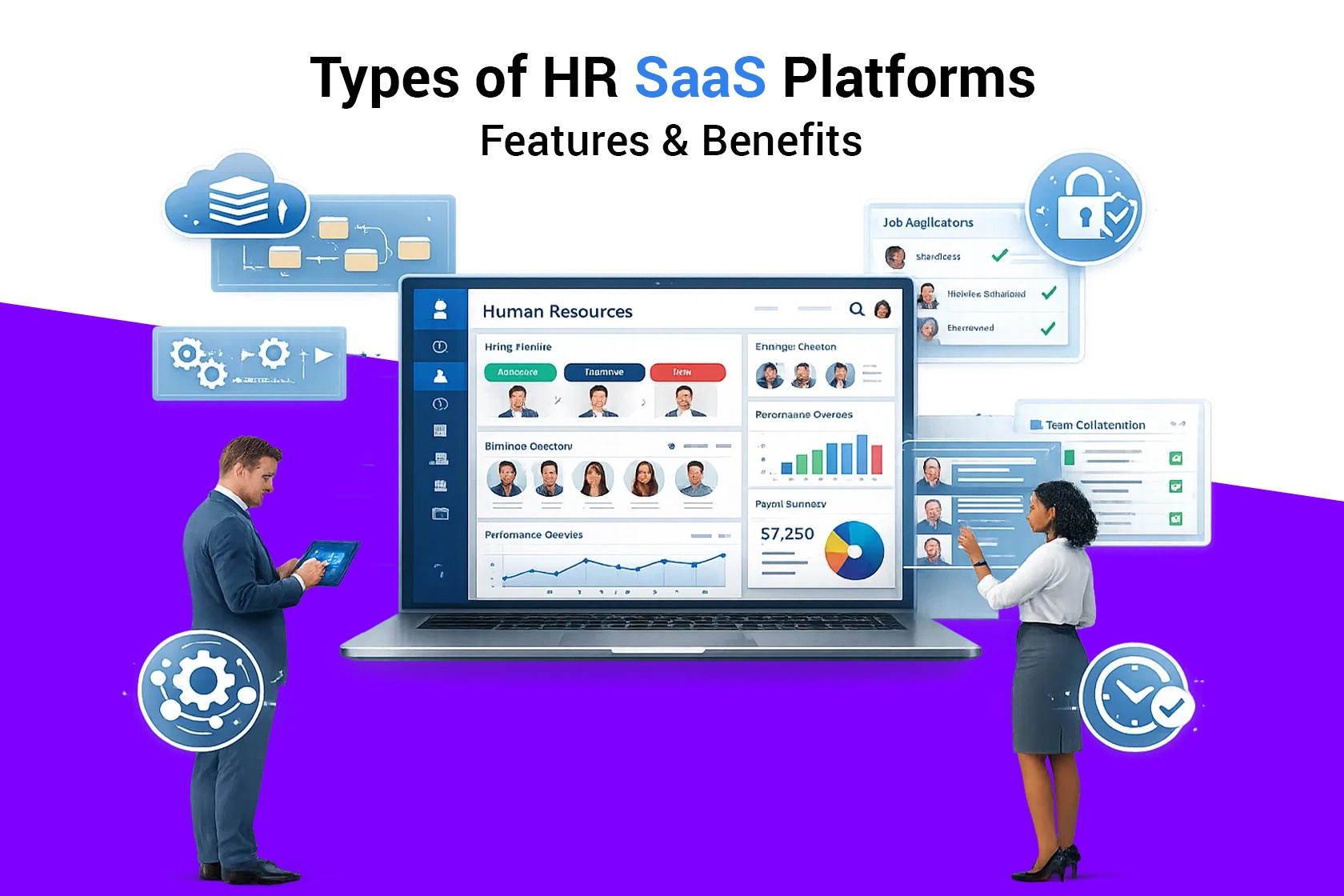
HR professionals have to deal with numerous tasks, including paperwork, performance management, employee relations, and compliance. If you work in HR, you must know that spreadsheets often fall short. This is why you need reliable cloud-based HR tools that can help you optimize your workflow.
In this guide, we discuss the core types of HR SaaS platforms, their features, and examples to help you figure out which one is the best for your business.
Key Takeaways
- HR SaaS platforms centralize major HR functions, like recruitment, payroll, engagement, and compliance in cloud-hosted systems.
- Integrated tools are simple to use, while best-of-breed platforms are great for specialized functions.
- AI and predictive analytics are changing HR from administrative work to strategic workforce planning.
- Automation, scalability, and accessibility make SaaS platforms important for modern HR teams.
What Are HR SaaS Platforms?
HR SaaS platforms allow HR teams to manage their workflows without relying on on-premise software. These are used to streamline all HR tasks, such as payroll, employee engagement, recruitment, and performance reviews, into one single, secure system.
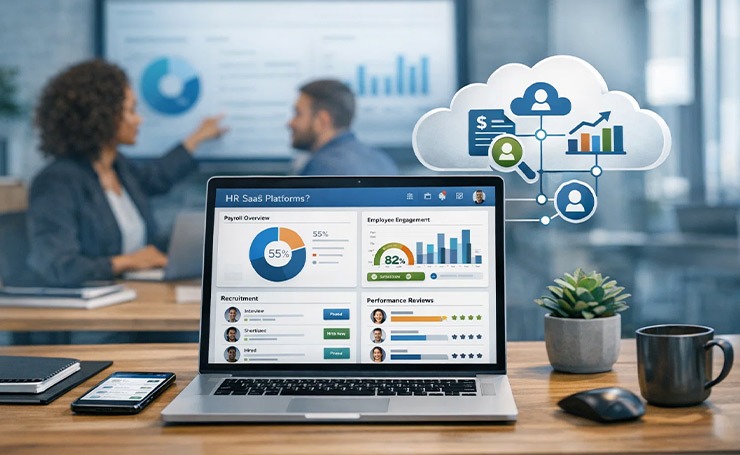
These platforms are great for all sizes of businesses. Small businesses can expand without the need for enormous IT investments, and large businesses get enhanced data visibility.
HRIS vs HRMS vs HCM
There are three main types of cloud-hosted HR solutions, including HRIS, HRMS, and HCM.

- Human Resource Management System (HRMS)
HRMS platforms manage payroll, onboarding, benefits, and recruitment. They are great if you want a one-stop system, as they handle a little of every HR task.
- Human Resource Information System (HRIS)
It is used to manage data, such as employee information, absences, and compliance documents. If your company has strict reporting guidelines and handles audits, HR analytics, and headcount, HRIS is ideal.
- Human Capital Management (HCM)
HCM focuses on more strategic HR tasks, such as workforce planning, performance reviews, succession, and learning. Large corporations use HCM to align employee strategy with business goals.
Core Types of HR SaaS Platforms
The following are the main types of HR SaaS platforms.
Payroll SaaS Software
Payroll SaaS software is a cloud-based system that automates wage calculations, tax compliance, and benefits. It works on monthly or yearly subscriptions, and HR teams can access it remotely using the internet.
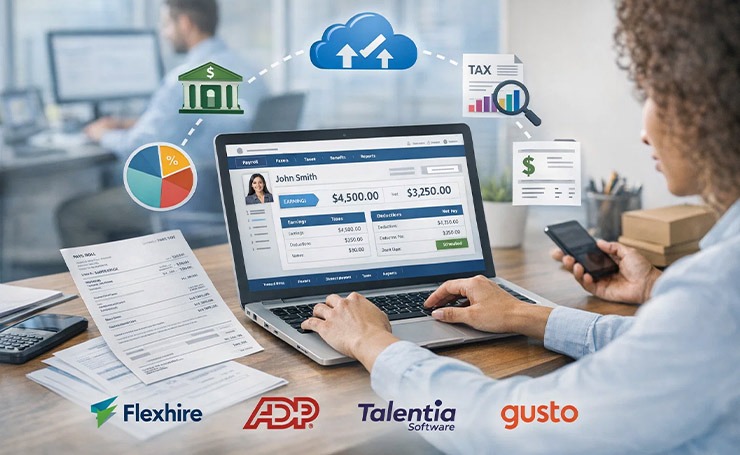
This system reduces manual errors in HR workflows and provides employees with self-service portals to manage their records.
Its key features include
- Automated payroll runs
- Direct deposit
- Regulatory updates
- Multi-state tax management
- Bank integration
- Reporting
Its example tools are
- Flexhire
- ADP
- Talentia Software
- Gusto
Recruitment and ATS SaaS
This SaaS software allows you to organize and automate all important stages of recruitment, from posting job ads to finalizing the hiring process. It also automates repetitive tasks to improve recruiters’ efficiency.
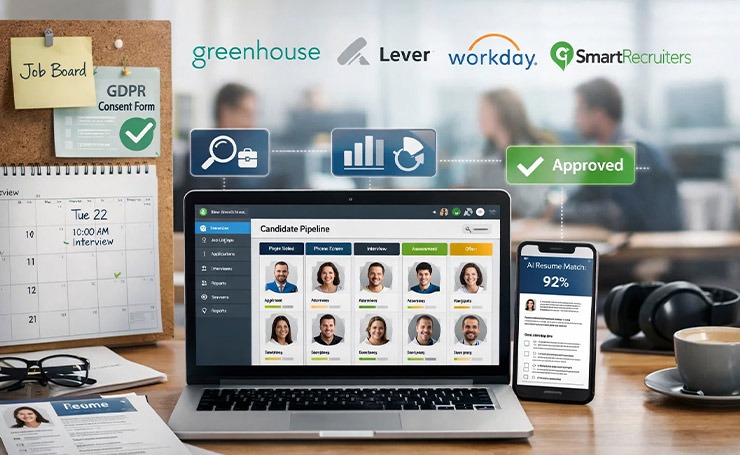
Moreover, these platforms are GDPR compliant, meaning they collect data processing consents, and candidates can always request to remove their data.
Its core features include
- Job posting
- Application management
- Recruitment analysis
- Interview scheduling
- Candidate pipelines
- AI screening
The main examples include
- Greenhouse
- Lever
- Workday recruiting
- SmartRecruiters
Performance Management SaaS
Performance management SaaS software focuses on improving an organization’s performance. It helps manage and develop employees efficiently. It shifts performance management from annual reviews to continuous, data-driven, and real-time feedback.
It covers
- Performance tracking
- KPI dashboards
- Performance appraisals
- Review templates
The example tools are
- Lattice
- 15Five
- Leapsome
Learning and LMS SaaS
LMS SaaS platforms are used to create, deliver, and track different training programs. They can be accessed through the internet without needing on-site installation. They are great for scalable and flexible training.
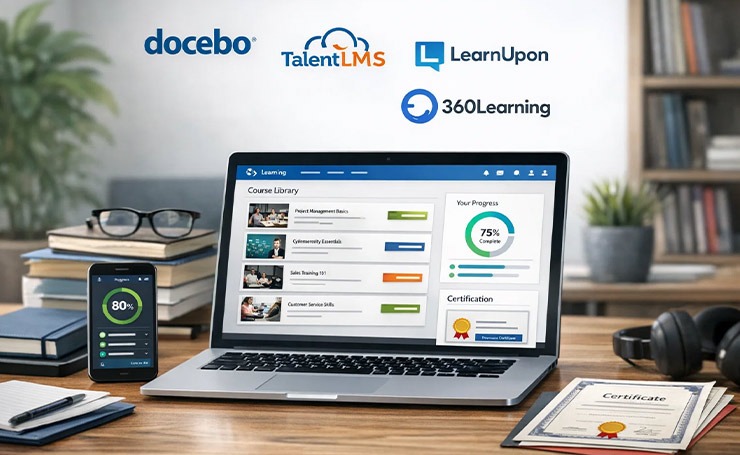
The main features of these platforms are
- Course libraries
- Progress tracking
- Certification management
Some top LMS SaaS options are
- Docebo
- TalentLMS
- LearnUpon
- 360Learning
Workforce Management SaaS
Workforce management SaaS software automates and operates staff management, including scheduling, payroll, time-tracking, and compliance. It helps businesses increase efficiency, reduce administrative costs, and enable easy collaboration among remote teams.
Some features include
- Shift planning
- Overtime tracking
- Workforce analytic
- Time and attendance
- Scheduling and forecasting
The tools you should explore are
- UKG
- Rippling
- Paylocity
- Deputy
Benefits Administration SaaS
These platforms automate the management, enrollment, and compliance of employee perks. These perks include health insurance, PTO, retirement plans, and other benefits. They replace paper-based processes with self-service portals, reducing HR teams’ workload and errors.
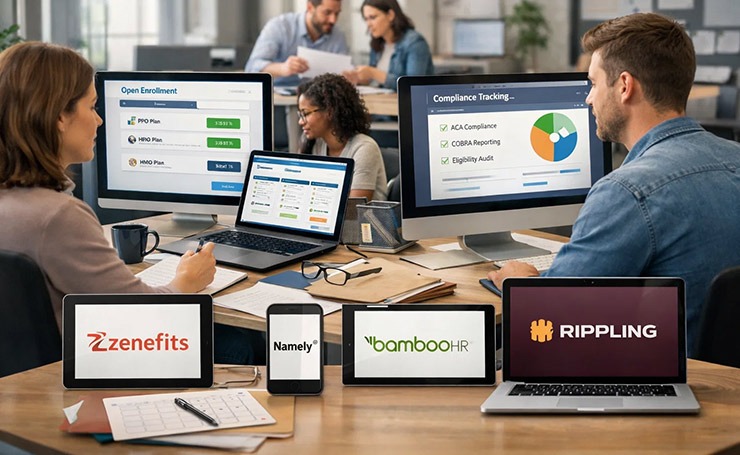
The features they offer are
- Open enrollment workflows
- Compliance tracking
- Benefits comparison tools
The example tools include
- Zenefits
- Namely
- BambooHR
- Rippling
Employee Engagement Platforms
These are the digital tools that measure, analyze, and improve employee satisfaction, motivation, and commitment to organizational goals. These replace surveys with real-time feedback and include peer recognition, AI-powered sentiment analysis, and 360-degree feedback.
The features of these tools are
- Engagement analytics
- Recognition systems
- Sentiment tracking
- Data analytics
- Communication and culture building
Some example tools include
- Lattice
- Culture Amp
- 15Five
- Glint
Benefits of Using HR SaaS Tools
Adopting these SaaS tools offers several benefits.
Cost-effectiveness
SaaS removes the need for hefty upfront costs and ongoing hardware expenses. It is usually a predictable monthly fee, so your budget is not disrupted.

Also, the vendor handles all software updates and maintenance, so you do not need to spend much on IT resources as well.
Scalability
With SaaS, you do not need to rebuild your entire system, whether you are hiring more or fewer employees. You just need to buy a higher-tier plan and add new users without disrupting your workflow.
Accessibility
Every single feature runs on the cloud, making it easier for the teams to log in from anywhere. It completely eliminates the dependency on on-premise software and lets HR work happen regardless of the teams’ location.
Automatic Updates

Using these tools means no downtime or relying on your IT team to install new features. The vendor of these tools automatically updates them with new features, so your software stays up-to-date without disrupting your work.
Integration Capabilities
SaaS HR solutions are built to integrate with other applications. They can easily connect with tools like project management or payroll apps, so your data flows smoothly across all platforms.
Integrated vs Best-of-Breed HR SaaS Platforms
Integrated HR SaaS Platforms
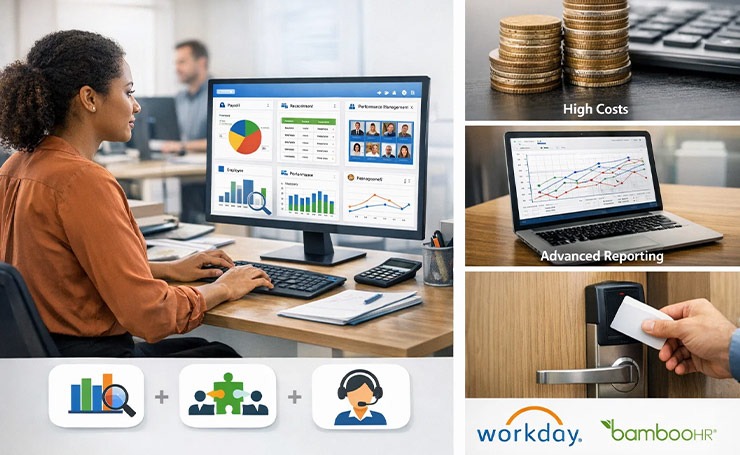
These SaaS platforms unify several HR functions in one system. So, instead of using separate tools for payroll, recruitment, employee management, and performance management, you can simply use integrated systems to get everything done.
Pros
- These platforms enable easy reporting and analytics evaluation, as all employee data is available in one system.
- They connect smoothly with the tools you already use.
- They also lower admin complexity, as they have one vendor, one login, and one support team.
Cons
- These tools might have high upfront costs, particularly larger bundles.
- Features such as advanced reporting may not be as rich as in a separate tool.
- You have limited flexibility, as you are locked into one vendor’s ecosystem.
Examples
- Workday
- BambooHR
Best-of-Breed HR SaaS Platforms
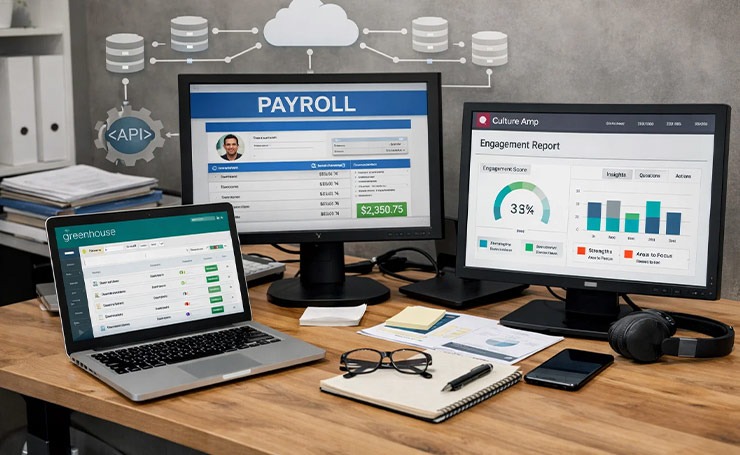
Best-of-breed HR platforms mean using separate HR tools for each HR function. For instance, your company can use one tool for payroll, one for ATS, and another for employee engagement.
Pros
- These specialized tools have advanced features.
- Top-rated vendors provide innovative features fast.
- They offer more flexibility to users.
Cons
- Integration might be difficult because you need connectors or APIs.
- More separate platforms mean more vendors and support channels to manage.
- If data is not unified in one system, reporting across so many platforms becomes harder.
Examples
- Greenhouse used for recruiting and ATS
- Culture Amp for engagement
Which Approach is Ideal?
- Small and medium businesses use integrated SaaS platforms because they are easy to use and simple to set up.
- Growing companies or enterprises may use best-of-breed HR SaaS tools to get more features in each area.
- There is a hybrid approach as well, where many companies use a core suite (HRIS with payroll) and add specialized tools for recruiting or engagement.
How to Choose the Right Type of HR SaaS Platform
The right tool is the one that aligns completely with your business needs. Here are some factors you should consider.
Know your Needs
You should start by evaluating your company’s size and number of employees. A large company with more than 500 employees needs scalable options with compliance tools, global payroll (considering the team is distributed across different countries), and advanced reporting.

However, if you run a company with only 10 to 15 employees, you just need solid payroll, time-tracking, and onboarding options.
Check for Integration
Choose the tool or platform that connects easily with your existing systems, such as CRMs, accounting tools, and communication platforms.
Explore its User-friendliness
User-friendliness does not mean visual aesthetics. It means that the tool is easy to use, so that your team grasps how it works quickly. If your employees have to open 10 different things to approve one leave request, they will not use the platform.
Consider its Support Quality
Despite being handled by the vendor, your system can go down at any time. This is why you need to choose a reliable provider who is responsive and solves the issue quickly, so your work never stops.
Know What’s Included in Your Payments
Some SaaS platforms charge per user, while others offer tiered pricing and even extra services at monthly or yearly rates. Make sure to ask what you are paying for, what is included in the base fee, and what is considered an add-on.
Future Trends in HR SaaS Platforms
Look out for the following future trends in SaaS HR solutions.
AI in Recruitment
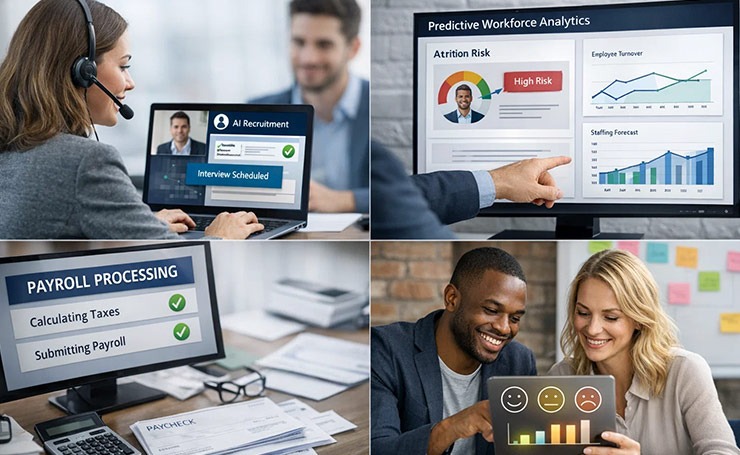
AI is evolving the hiring process. It will not only parse resumes but also show whether a candidate is the right fit, automate interview scheduling, and reduce bias.
Predictive Workforce Analytics
These platforms will use predictive analysis to show what will happen, rather than just reporting what has already happened. For instance, they will predict turnover risk even before an employee leaves, tell future staffing needs, etc.
Automation in Payroll
Payroll SaaS tools are already automating tedious tasks. Some amazing advancements include real-time tax filing and calculation, automated benefits deductions, and connecting with other workforce systems.
Employee Experience Platforms
Now, HR tools are not only used for administrative tasks. Instead, they are shifting to experience-focused solutions. For example, they focus on continuous feedback, pulse surveys, culture-building tools, and sentiment tracking to help higher leadership understand workforce mood.
These tools help in better employee retention, engagement, and workplace satisfaction.
The Bottom Line
This blog talked about different types of HR SaaS platforms. They help organizations reduce manual workload and replace it with cloud-based systems. They also play an important role in improving efficiency, compliance, and employee engagement.
With evolution in AI and predictive analysis, HR SaaS will shift from operational support to strategic workforce planning.
Find out more about SaaS and its impact on different industries on Latest SaaS Updates.
FAQs
What is the Best HR SaaS Platform for Small Businesses with Remote Teams?
Small businesses with remote teams typically benefit from HRIS platforms that combine different functions, like payroll, onboarding, and time-tracking in one system.
Are AI-powered HR platforms replacing HR Professionals?
No, AI automates repetitive tasks and provides insights. However, the responsibility of strategic decision-making, culture building, and employee relations still needs human expertise.
How do SaaS HR Solutions ensure Data Security and Compliance?
Many HR SaaS solutions use encrypted cloud storage, audit trails, role-based access control, and compliance updates aligned with local labor regulations.
