
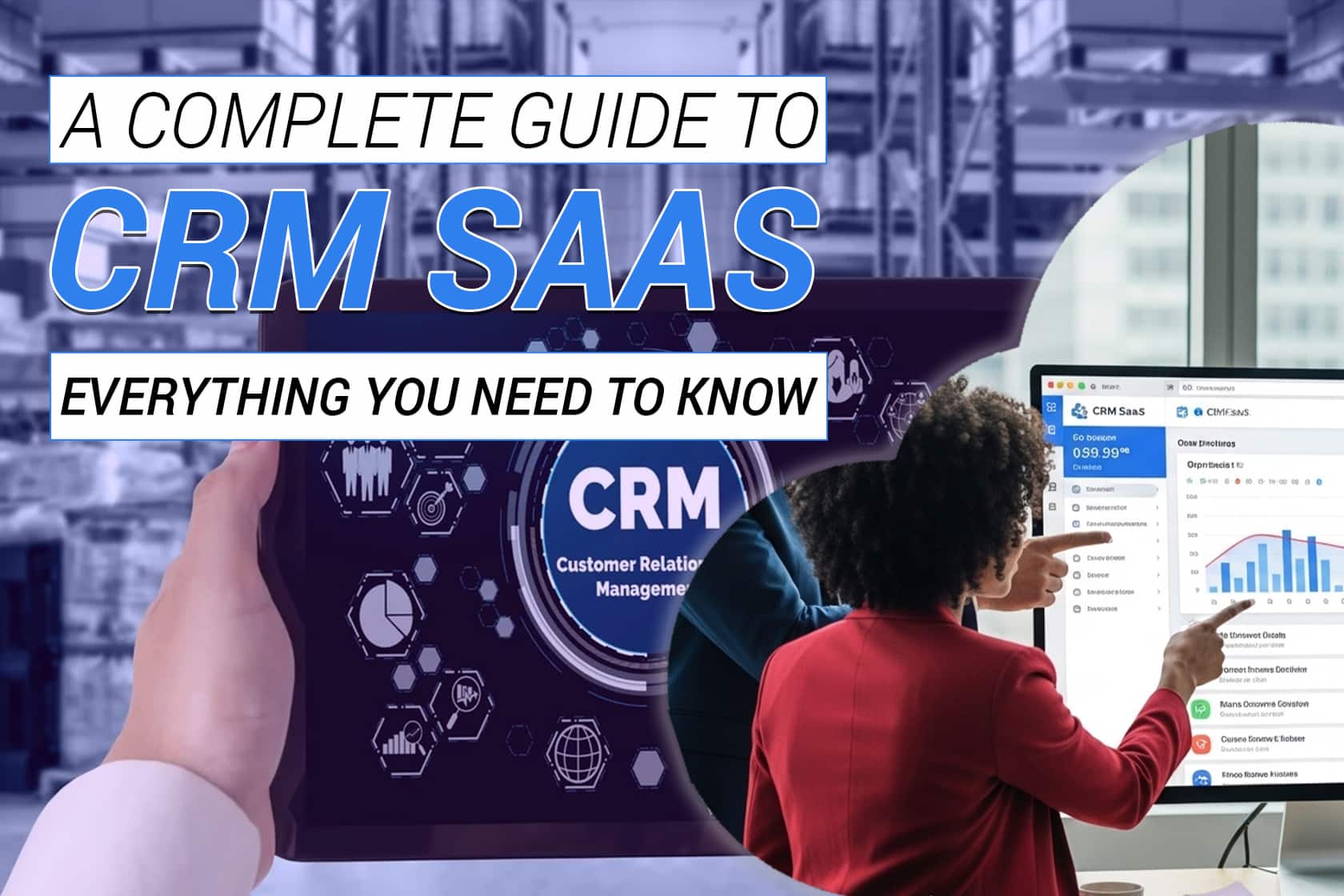
In this digital world, managing customer relationships has become essential. Whether you are a growing startup or an established enterprise, you need the right CRM tool to organize and streamline interactions with your customers.
When you combine CRM with SaaS, you get convenient software on which you can engage and retain your client base. CRM SaaS is a modern, accessible, and scalable solution for every business.
In this blog, we will explore everything about CRM SaaS, its features, benefits, and how it will evolve alongside businesses in the future.
30-Second Summary
CRM SaaS combines customer relationship management with cloud-based software. Using a subscription model, it allows you to provide a great customer experience by managing your workflow effectively.
Learn about what CRM SaaS is and how it is streamlining the workload for businesses in this blog. Read on to find out its use across different industries and the real-world examples that highlight its impact.
Understanding the Basics: What is CRM and SaaS?
Before moving forward, let’s understand what SaaS and CRM are and how they work together.
What is the Meaning of CRM?
CRM stands for Customer Relationship Management. It refers to all the tools, strategies, and processes that manage a business’s interaction with current and potential customers. The goal of the CRM is to track leads, manage contacts, enhance communication, and monitor customer activity.
CRM tools merge the company’s and customer’s data and manage customer relations. They span across different departments, such as marketing, sales, e-commerce, and customer service interactions.
What is SaaS?
The full form of SaaS is Software as a Service. It is a cloud-based software delivery model that operates on a subscription. Users have to pay a certain amount monthly or yearly to access the software.
Users do not have to maintain or update the software. SaaS providers do all of it. Furthermore, you need the internet and your device to use the software from anywhere in the world. Some examples of SaaS are Zoom, Dropbox, Canva, and Shopify.
The combination of CRM and SaaS
CRM SaaS is the best of both worlds. It is a ready-to-go platform on the cloud that helps all businesses manage communication, track sales, and analyze customer activity in one place.
What is CRM SaaS?
CRM SaaS is a cloud-based platform for customer relationship management. It is a subscription-based solution that you can access through a web browser.
Unlike traditional CRM, you do not need IT support or an on-premise installation. It is hosted and maintained by its provider. You can use it from anywhere on any device through the internet.
Difference between a Traditional CRM and a SaaS CRM System
Traditional or in-house CRM gives you more control over customization. You can tailor its design, features, and development according to your business’s needs. However, higher upfront costs and restricted accessibility across multiple devices make it impractical.
On the other hand, CRM SaaS is a low-maintenance, seamless, and cost-efficient solution, particularly for SMBs (small and medium businesses). The Cloud CRM services allow you to manage leads, sales pipelines, and even automate tasks without any hassle.
The following table compares both to show their characteristics.
| Features | Traditional CRM | SaaS CRM |
| Cost | High upfront cost | Monthly or yearly subscription |
| Accessibility | Local access only | Accessible from anywhere |
| Installation | On-premise | Cloud-based |
| Maintenance | Handled internally | Handled by the provider |
Key Features of CRM SaaS Solutions
An ideal SaaS CRM software is more than just managing your clients’ contacts. It is designed to improve customer engagement and boost internal team productivity.
Let’s dive into the salient features of CRM SaaS:
- Contact Management
SaaS CRM provides a centralized database where you have information about your clients, including purchase history and preferences. It helps in delivering a personalized service to the customers and improves sales quickly.
- Sales Automation
A good CRM system allows you to spend your time growing your business instead of repetitive tasks through sales automation. It handles tasks like data entry, reminders, and follow-ups through an automated workflow and lead tracking, making you stay ahead of the competition.
- Multi-channel customer support
CRM SaaS solutions have features like customer feedback collection, ticket management, and self-service tools. These processes allow you to effectively respond to your clients across various channels, such as email, chat, phone, and social media.
- Analytics and Reporting
CRM SaaS provides a real-time dashboard to track performance, sales metrics, and customer behavior. You can make effective decisions regarding your business that are backed by numbers. These strategies provide you with clarity to achieve your goals.
- Scalability
A SaaS CRM evolves with the changing needs of your business. Whether you are adjusting to new market trends or expanding your client base, this system scales with your business. From handling new team members to new operational requirements, it streamlines every task.
- Data Security
SaaS providers employ robust strategies to mitigate the risk of data breaches. They use encryption and user permissions to comply with data security regulations. These measures protect both customers’ and businesses’ sensitive information.
- Mobile Access
SaaS CRMs have become mobile-friendly as well. You can access all CRM tools and customer data on the go. With the help of responsive website design and dedicated apps, SaaS based CRM makes managing tasks easier.
- Integration Capabilities
The best SaaS CRM API makes the integration of software seamless with other devices. You can integrate it with any existing tools and platforms. It creates a streamlined and cohesive environment for your work operations.
- Lead and Pipeline Management
To improve your sales, it is essential to visualize and manage your sales pipelines. It not only boosts your productivity but also improves forecasting. CRM SaaS helps you prioritize closing sales faster by tracking leads.
Benefits of CRM SaaS for Businesses
Businesses switch to cloud-based CRM to simplify tasks and decrease IT dependency. It also undergoes regular maintenance updates without requiring any internal interference.
Let’s break down the benefits of choosing SaaS based CRM.
Faster Deployment
CRM SaaS is a ready-to-use platform and requires minimal setup. On-premise CRM takes months to develop and deploy. However, setting up CRM SaaS is a matter of days or weeks. The cloud-based CRM can start managing its tasks immediately without IT involvement.
Lower Initial Cost
Unlike in-house CRM, SaaS CRM does not require any significant financial and technical commitments. Using CRM SaaS removes the need to invest in IT personnel, software, and servers. It is a cost-effective solution for businesses looking to optimize their resources.
Reduced Maintenance Costs
CRM SaaS companies work behind the scenes to update and maintain the software. They fix bugs, handle updates, and apply security patches. It significantly reduces the maintenance costs for businesses.
Ongoing Vendor Support
With SaaS CRM, businesses do not need to rely on their internal IT team. CRM SaaS providers continuously offer customer support to businesses, troubleshoot issues, and optimize system performance. It ensures faster problem resolution without burdening the IT personnel.
Faster Return on Investment (ROI)
SaaS CRMs offer faster deployment and lower upfront costs. It results in a quicker return on investment. As the setup takes minimal time, businesses start using the system immediately, leading to rapid team onboarding and operational efficiency.
Automatic Updates
SaaS CRM providers are responsible for updating the system regularly. They develop and deploy the latest features. The updates roll out automatically, without the manual implementation of the internal IT team. Businesses can adopt new trends and tools without extra effort.
Popular CRM SaaS Platforms
There are multiple SaaS CRM systems that are effectively managing the tasks of organizations. This section explores some real-life examples of popular CRM SaaS platforms.
HubSpot CRM
HubSpot is an excellent CRM for SaaS businesses. This platform is totally free and has easy-to-use tools to aid in customer engagement and retention. An exceptional feature of this platform is that it guides you through the lead management process by offering suggestions and native AI tools.
Salesforce Customer360
Salesforce is a famous platform offering numerous products to track your sales and data. Its Customer360 is an efficient solution for customer relationship management to keep all the products of your clients in one place. The customer interaction tracker allows you to see customer information, such as emails and calls, at a glance.
Monday Sales CRM
Monday Sales CRM has specific software solutions. You can find features such as a sales dashboard, lead management, and a deal tracker. You can customize automation for emails and reminders. It can be easily integrated into any area of business and productivity. The interface is modern and prioritizes user experience.
Zoho CRM
Zoho CRM effectively maintains customer relations. The “Motivator” is a leaderboard that motivates sales representatives to input their data and stay on top of data entry. It offers you a free trial and a monthly subscription. As a motivating tool for the sales department, it prioritizes customer satisfaction.
Insightly CRM
This platform primarily focuses on workflow automation, pipeline management, and creating a custom interface. This interface is tailored to your needs and is accessible on a laptop and mobile. The built-in project management streamlines the sales. Moreover, you can create custom dashboards for specific data and KPIs.
Pipedrive
Pipedrive uses a tracking interface that shows you the progress of your meetings, emails, and other activities. You can create graphs based on sales forecasting, KPIs, and client data. It has an AI function that scores your leads that it thinks you have a high chance of closing. It also suggests actions you should take for these leads.
Zendesk Sell
Zendesk Sell is an easy-to-navigate CRM SaaS. It is customizable and uses AI to aid in small tasks, such as managing help tickets. This app allows you to communicate with others through email and messaging. If you juggle multiple channels for communication, Zendesk Sell’s cohesive communication tools are ideal.
CRM SaaS Across Different Sectors
The versatility of SaaS CRM tools makes it indispensable in numerous industries. With a focus on streamlining tasks and engaging clients, many organizations from different sectors are adopting it.
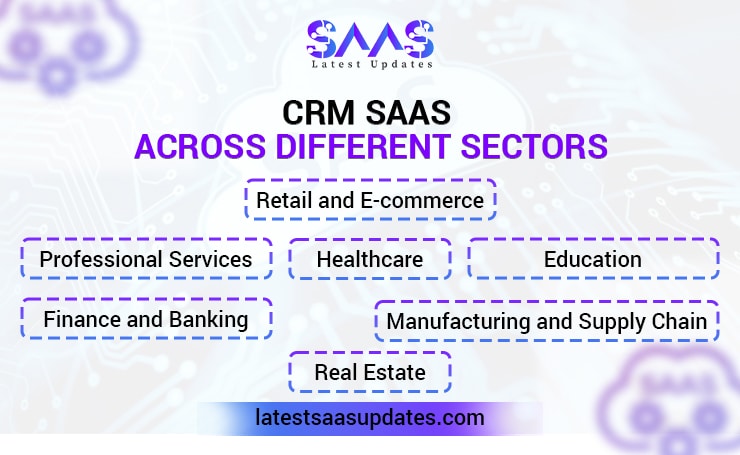
Let’s have a look at how different industries use CRM SaaS.
Retail and E-commerce
CRM SaaS can help you centralize the purchase history of your customers. You can automate marketing campaigns and focus on growing your business. It also manages loyalty programs and retains clients.
Professional Services
For professional services such as lawyers, consultants, and other agencies, CRM SaaS is necessary. You can organize client communication in one place and schedule appointments on the platform. It also monitors billing cycles and analyzes project progress.
Healthcare
This cloud-based solution is rapidly getting adopted in the healthcare sector. It manages patient interactions and their appointment history securely. Moreover, you can automate simple tasks, such as follow-up messages and reminders.
Education
CRM SaaS is efficient for student and parent communication. You can easily track enrollments, attendance, and performance of pupils. Furthermore, this software allows you to automate outreach and tasks for admissions.
Real Estate
Real Estate businesses can effectively manage property inquiries and client records on CRM platforms. You can grow your clientele by automating follow-up messages for potential buyers. Visual dashboards enable users to track deals through sales funnels.
Finance and Banking
With Saas based CRMs, you can keep track of client portfolios and interactions. The easy-to-use interface allows you to ensure regulatory compliance through audit trails. It provides you with personalized services through valuable data insights.
Manufacturing and Supply Chain
You can easily maintain distributor and vendor relationships using SaaS CRM. It is ideal to track leads and orders in your pipeline. Moreover, the communication feature allows you to coordinate between sales and production teams.
What to Consider Before Choosing a CRM SaaS
Choosing the right CRM platform can be confusing. However, this section walks you through what to consider before selecting any SaaS CRM platform.
Define your Business Goals
Before selecting any CRM SaaS platform, you need to decide on your business goals. Do you want to improve customer relations, streamline workflow, or improve sales? Setting clear goals helps you filter out applications that do not serve the functions you are looking for.
Evaluate how it will evolve with your Business
Considering how a CRM solution scales with your business is important before selecting it. The ideal platforms evolve without disruptions. Make sure to analyze the tools that can integrate with your existing system to streamline every task.
Choose the Right Features in the Right Budget
Compare the features and pricing plans of different CRMs before making a purchase. The ideal platform should have essential features in a cost-effective subscription plan. Ensure that it has customizable tools and powerful analytics.
Integration of AI in SaaS CRM
CRM SaaS is leveraging AI to help businesses move forward. With AI, your CRM platform becomes a partner that grows your business by connecting you with your customers.
AI assists CRM solutions in various ways:
For sales: AI enables predictive analysis that evaluates customer behavior based on their history. It shows if clients will retain or churn. Moreover, it shows which leads can convert, sales forecast, and allows automated follow-ups.
For customer engagement: AI in CRM divides your audience into distinct groups for a more targeted marketing campaign. It recommends products and services by analyzing the past behavior of your clients and makes every suggestion feel personal.
For customer support: Chatbots and virtual assistants handle queries 24/7 by instantly responding to clients. NLP (Natural Language Processing) makes conversations with customers effective and smooth.
For operations: It reduces the time spent on manual data entry by automating it. Integration of AI in CRMs also ensures that complex workflows become streamlined. It allocates and optimizes resources by predicting workload.
For insights and strategy: AI maps out the customer journey by analyzing interactions. It flags anomalies in customer data to point out any potential issues. Moreover, it ensures you are compliant with regulations and manage risks by monitoring the data.
The Future of CRM SaaS
CRM SaaS solutions are becoming deeply integrated with new technologies. As businesses are moving forward to digital platforms, cloud-based CRMs are not limited to managing customer data. Now, they can anticipate customers’ needs and automate decision-making to enhance the overall client experience.
Apart from the integration of AI, expect the following features in the evolving CRM SaaS solutions:
Deeper Automation
In the future, automation is expected to go beyond emails and reminders. Expect CRMs to:
- Automatically sync data across departments
- Handle end-to-end sales
- Automate follow-ups based on clients’ activity
Connectivity through APIs
As businesses are relying more and more on tools, expect CRM to offer even better integration through APIs. It will:
- Integrate with everything, from accounting software to chat applications
- Allow businesses to build personalized tech stacks
- Enable companies to add or remove integrations without disruptions
Mobile-Friendly Experience
With the rise of the remote and hybrid work model, CRM SaaS will continue to:
- Prioritize intuitive mobile applications
- Offer offline accessibility
- Provide real-time collaboration with the team
Stronger Security
To reduce the concerns of users regarding data breaches, CRM SaaS platforms will provide stronger security through:
- Advanced authentication and encryption
- Compliance with GDPR, HIPAA, and CCPA
- Transparent use of data policies
Wrapping Up
Many businesses use CRM (Customer Relationship Management) to engage and retain customers. When combined with SaaS (Software as a Service), it leverages the flexibility of the cloud to save time and create smart work strategies.
Whether you are a small business looking to grow or a large enterprise wanting a scalable solution, CRM SaaS platforms are ideal for you. Keep exploring how to move your business forward in this digital world with the Latest SaaS Updates.
FAQs
What is CRM in SaaS?
CRM SaaS is a cloud-based customer relationship management platform. It allows businesses to access it through the internet, eliminating the need to install and maintain it on their own servers.
Is HubSpot CRM free?
Yes, HubSpot CRM is 100% free. It is accessible to businesses of all sizes and helps them manage contacts, track deals, and provide other features.
Is Microsoft CRM a SaaS?
Yes, Microsoft CRM, particularly Microsoft Dynamics 365, is a SaaS application. Users can access it through a web browser and the internet without the need for on-premise infrastructure and management.
