
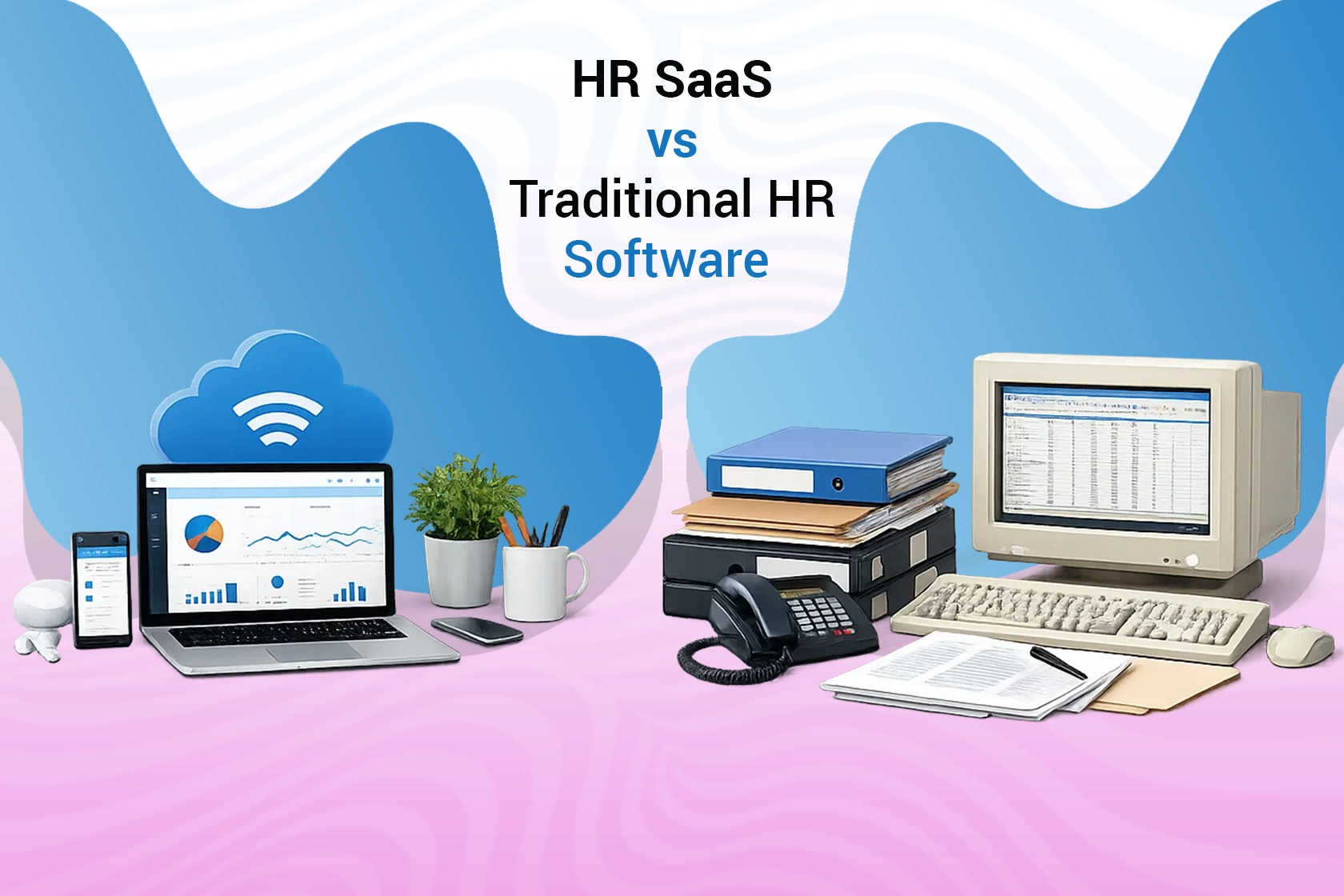
Modern businesses are rapidly digitizing their processes, and HR is among the departments that have undergone a major transformation. Traditional HR software is getting replaced by cloud-based HR systems, making things smoother.
In this guide, we explore the differences between HR SaaS vs Traditional HR software, including their infrastructure, deployment, cost, and security.
Key Takeaways
- HR SaaS solutions offer lower upfront costs, automation, and scalability.
- Traditional HR software provides deep customization and full data control.
- Cloud HR solutions are ideal for remote teams and growing businesses.
- The right choice between them depends on your compliance needs, IT resources, and growth plans.
What is Traditional HR Software?
Before we jump into the differences, let’s clear these concepts. Traditional HR software operates on an on-premises system. It means that it is installed on your computer and you have to configure and maintain it.
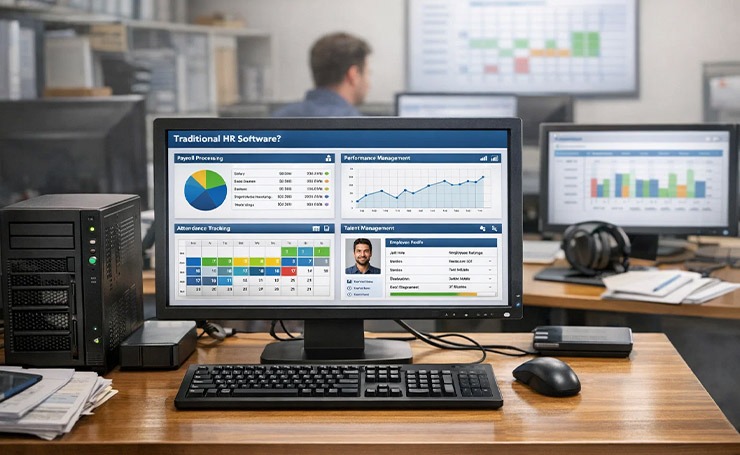
This software supports different HR functions, such as payroll processing, performance management, employee attendance tracking, workforce management, and talent management.
What is HR SaaS?
HR SaaS software is hosted on cloud servers. You can use it with an internet connection. These models are offered on a subscription basis and managed by the vendor. You can use this HR software from anywhere.
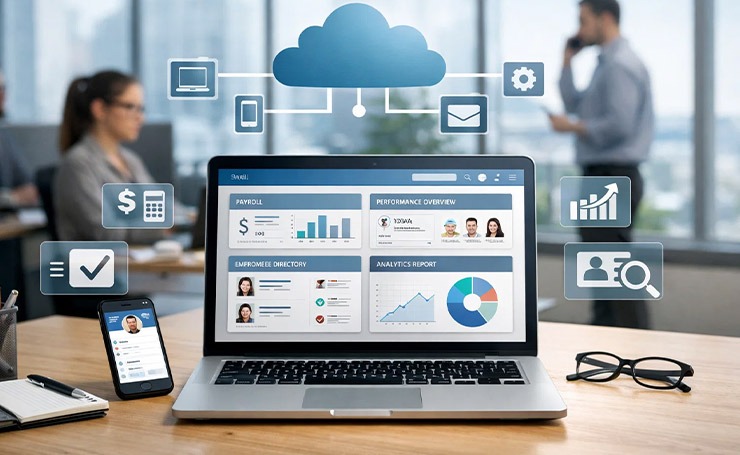
Cloud-based HR solutions are used for payroll automation, performance tracking, employee data management, employee self-service portals, and workforce analytics.
Key Differences between Traditional HR Systems and HR SaaS
Traditional HR systems and HR SaaS solutions differ in the following aspects.
1. Deployment and Infrastructure
HR SaaS deploys on cloud platforms that use remote servers. It is updated and maintained by the service provider. This system eliminates the dependency on physical servers and local devices. Businesses save time, effort, and money by avoiding routine maintenance, hardware purchases, and issues caused by infrastructure failures.
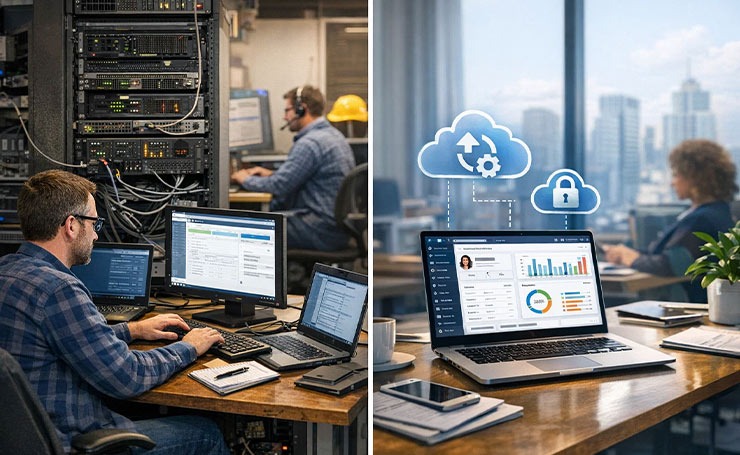
Traditional HR software depends on physical servers within offices. It needs an IT team to support regular upgrades and manual security. If you want to expand it, you need additional budget, which limits scalability and slows HR operations.
2. Cost Structure
HR SaaS has a subscription-based pricing models that often come with different tiers. This pricing structure reduces the costs of infrastructure upgrades and maintenance. Operational costs are also predictable and easier to manage.
Traditional HR software requires upfront investment for licenses, configuration, and hardware. You also need ongoing costs for IT staffing, server maintenance, and system updates. These prices grow with the workforce, affecting budget planning.
3. Implementation Time
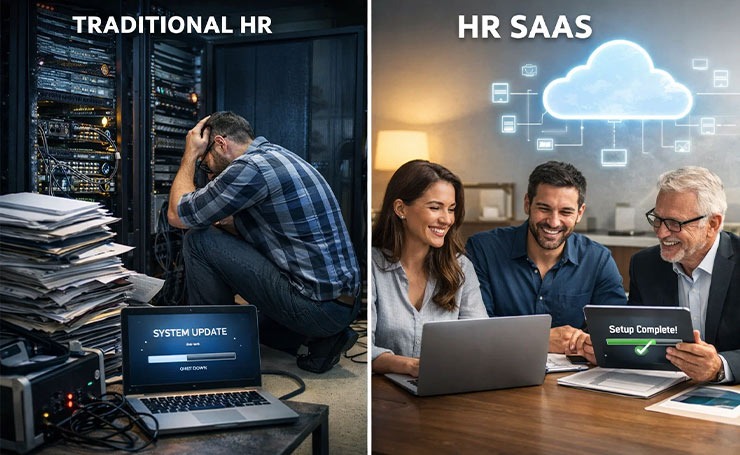
The HR SaaS implementation is quick. Businesses can easily start using it within a few weeks. The provider handles all the updates, minimizing downtime. Moreover, businesses can start using the new features without disrupting the workflow.
Traditional HR software takes months to implement due to manual configuration and hardware setup. Updates need downtime, interrupting workflow.
4. Automation and HR Operations
HR SaaS platforms automate major HR operations, including payroll processing, compliance reporting, employee attendance, and performance tracking. As repetitive tasks are automated, HR teams can focus on strategic work, such as employee engagement and workforce planning.
Traditional HR software relies on manual processing. As HR teams handle repetitive tasks like data entry, it causes operational delays. There is also a risk of data inconsistencies from manual workflow handling.
5. Scalability and Performance

HR SaaS is easy to scale as the workforce grows. You can add more users and start using additional features and tools without system redesign. The performance remains stable due to distributed cloud-based systems.
With traditional HR software, scalability can be difficult. When the workforce grows, businesses need server upgrades and manual configuration of this software. Performance also struggles when data volume increases.
6. Accessibility and Flexibility
HR SaaS offers immense flexibility because leadership, HR teams, and employees can access it from anywhere through an internet connection. This HR solution supports remote and hybrid teams without slowing down HR processes.
Traditional HR software’s access is limited to the office network and a specific device. Employees depend on HR support for simple tasks, which interrupts workflows. Moreover, limited access creates issues for modern workforces that are often distributed and work remotely.
7. Data Security and Compliance
HR SaaS has strict security guidelines and protects employees’ data through backups, encryption, access controls, and compliance policy. Cloud-based HR solutions maintain high data integrity and allow businesses to continue their tasks even during system failures or security breaches.
With traditional HR software, the responsibility of data security falls on internal teams. Physical servers are at risk of facing unauthorized access or delayed security patches. Therefore, it makes protecting employee data difficult.
8. Customization
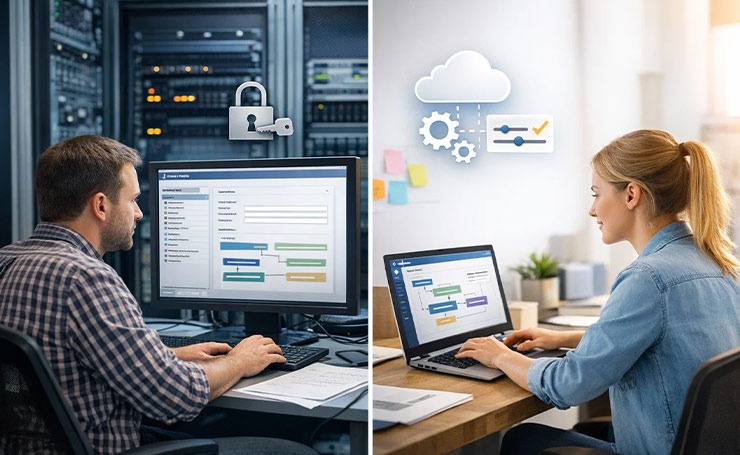
HR SaaS allows users to customize to some extent. You can change workflows, add custom fields, and change the user interface. However, cloud-based systems work within standardized frameworks that limit big architectural changes.
As traditional HR software is installed on private servers, IT teams have complete control over customization. Organizations have ownership over the data and functionality that allows them to modify processes that are not possible in a shared cloud environment.
9. Integration Capabilities
HR SaaS platforms offer high integration capabilities with many modern enterprise tools, such as payroll services, collaboration apps, ERP systems, and analytics platforms.
As for traditional HR software, integrating it with other tools, like CRM or ERP, can be complex and expensive.
Comparison Table: Traditional HR and HR SaaS
| Feature | Traditional HR Software (On-Premise) | HR SaaS (Cloud-Based) |
| Deployment | Installed on local servers and company computers | Delivered via the cloud and accessed through the internet |
| Cost Structure | High upfront costs (hardware, licenses, setup) | Subscription-based (monthly/annual) with lower initial cost |
| Maintenance and Updates | Managed by in-house IT; manual updates required | Vendor handles automatic updates and maintenance |
| Accessibility | Limited to the office network or secure remote access | Accessible anytime, anywhere via the internet |
| Scalability | Scaling requires new hardware and infrastructure | Easily scale users/features as business grows |
| Implementation Time | Longer setup and infrastructure installation | Faster deployment with minimal setup |
| Customization | Highly customizable to specific workflows | Customization may be limited compared to on-premise |
| Data Control | Full internal control over data and servers | Data stored on vendor servers; provider manages security |
| Security Responsibility | Organization responsible for security and backups | Vendor provides security, backups, and compliance tools |
| Internet Dependency | Works without internet (local access) | Requires a stable internet connection |
| Remote Workforce Support | Limited support for remote teams | Ideal for a remote and distributed workforce |
| Integration and Automation | May rely on manual processes and limited automation | Integrates easily with modern tools and automates HR workflows |
| Employee Self-Service | Often limited or unavailable | Self-service portals improve efficiency and engagement |
| Long-Term Costs | Maintenance, upgrades, and IT staffing increase costs | Predictable costs and lower total cost of ownership |
| Best For | Large enterprises needing full control & customization | SMEs and growing companies need flexibility and scalability |
Traditional HR Software: Pros and Cons

Pros
- It gives you full control over data and storage.
- You can customize it deeply according to your workflows.
- It works even without an internet connection.
- It has one-time licensing that can be cost-effective in the long run.
- It offers easier compliance control for strict regulatory environments.
Cons
- It has high upfront costs.
- It needs an in-house IT team for updates and maintenance.
- It has slow implementation and upgrades.
- It has limited remote accessibility.
- Its scaling requires additional hardware and infrastructure.
HR SaaS: Pros and Cons

Pros
- It has a lower upfront cost with predictable subscription packages.
- It is accessible at all times from any location.
- The vendor updates and maintains it.
- It offers easy scalability as the workforce grows.
- It has built-in automation, integrations, and employee self-service tools.
Cons
- It needs a reliable internet connection.
- It offers less customization.
- The ongoing subscription costs can add up over time.
- It stores data on third-party servers.
- It can cause possible vendor lock-in or migration challenges.
Which One Is Right for Your Business?
Your choice depends on budget, IT resources, security needs, and growth plans.
Traditional SaaS Software
Choose it if
- You need full control over employee data and security
- Your workflows need deep customization
- Your business operates in a highly regulated industry
- You have an in-house IT team that manages systems
- The internet access is limited or unreliable
HR SaaS Solutions
Choose it if
- You need lower and more predictable upfront and monthly or annual costs.
- Your team is distributed and needs remote access
- You want to scale quickly
- You want minimal IT work and automatic updates
- You want automation, analytics, and employee self-service
Why Businesses Are Shifting to HR SaaS

Modern SaaS software provides multiple benefits that traditional HR software does not. It is smarter, lighter, and faster. Businesses using cloud-based HR solutions do not have to worry about hefty upfront costs, maintenance, or installation. It operates on the cloud with automatic updates. This agility is necessary in this evolving digital world; this is why businesses are using it over traditional HR software.
In a Nutshell
Choosing between HR SaaS vs traditional HR software depends on your business priorities. If you want full control and deep customization, go for traditional software. If you operate a modern business seeking automation and remote accessibility, choose HR SaaS.
For more interesting SaaS-related information, visit Latest SaaS Updates.
FAQs
Is Cloud-based HR Software safe for Storing Sensitive Employee Information?
Modern software uses encryption, access control, multi-factor authentication, and regular security audits. Many vendors also comply with international standards like SOC and ISO certifications, which small and mid-sized companies may find complex to implement internally.
What Hidden Costs should I Consider before Choosing HR SaaS for the Business?
You should consider implementation costs, data migration fees, advanced add-ons, and premium integrations.
Can Small Businesses Benefit More from SaaS HRMS than Traditional HR Software?
Yes, small businesses often benefit more from HR SaaS solutions than on-premises ones because they eliminate the need for IT teams, servers, and the high upfront costs, while also offering scalability and automation.
How Difficult is it to Migrate from Traditional HR Systems to SaaS HRMS?
Migration complexity depends on data volume and customization levels. Many vendors offer streamlined onboarding, data mapping, and transition support to minimize disruption.
