
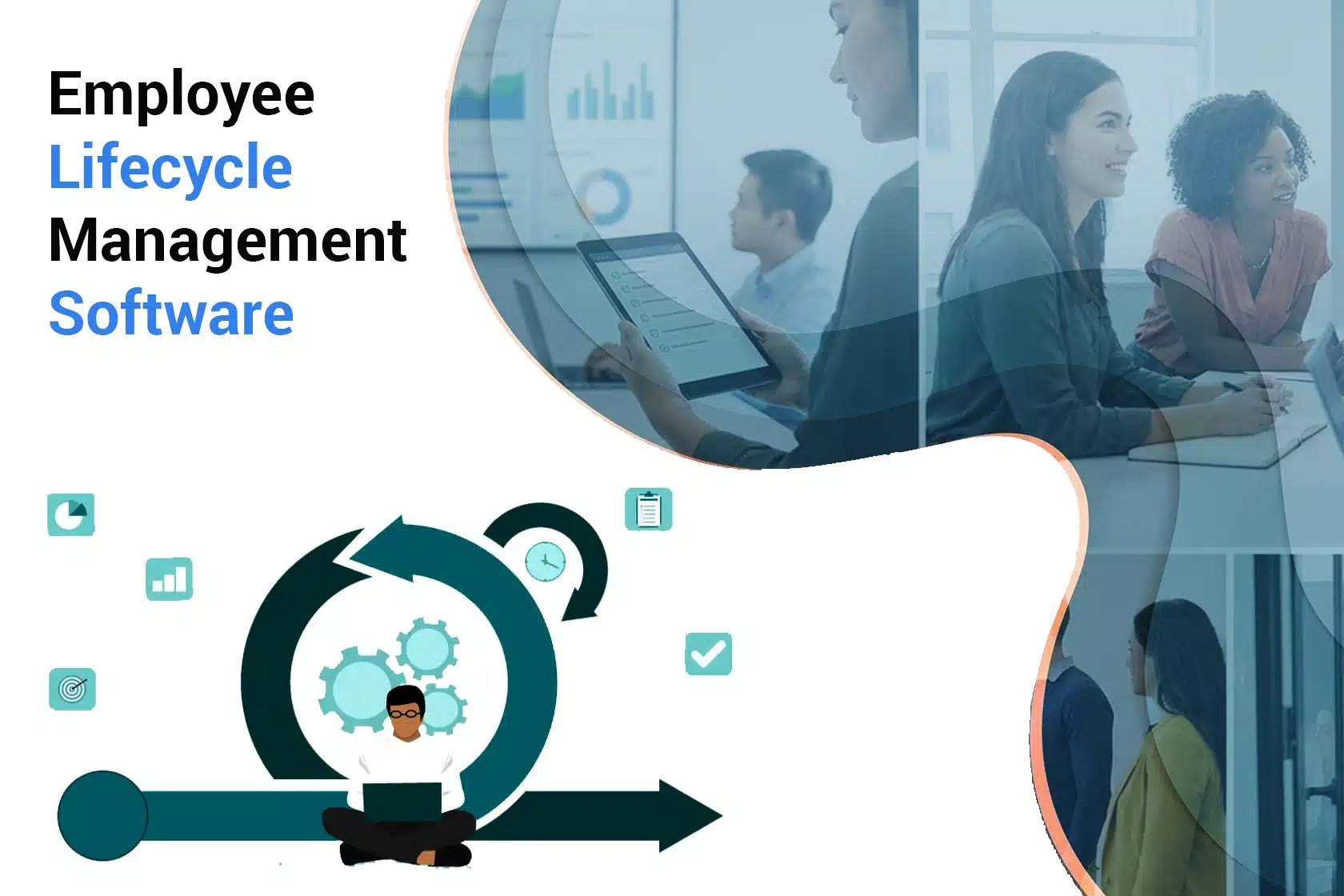
The HR department handles a lot of work daily. From attracting and recruiting to retaining and offboarding, everything falls under its responsibility. Employee lifecycle management software is necessary to manage employee-related tasks.
In this guide, we will walk you through what employee management software is, what it does, its key stages, core features, top platforms, benefits, and how to choose the right system for your business.
TL;DR
- ELM software merges the entire employee journey, from hiring to offboarding, in one system.
- It improves HR teams’ efficiency through automation and reduces manual HR work and errors.
- Integrated reporting and analytical features help businesses make data-driven decisions on retention, hiring, and performance.
- The right tool for your organization depends on your budget, scalability, and HR teams’ priorities.
What Is Employee Lifecycle Management Software?
Employee lifecycle management (ELM) software helps HR professionals manage employees in one centralized system. The software covers key HR processes, including employee onboarding, performance management, hiring, and benefits administration.
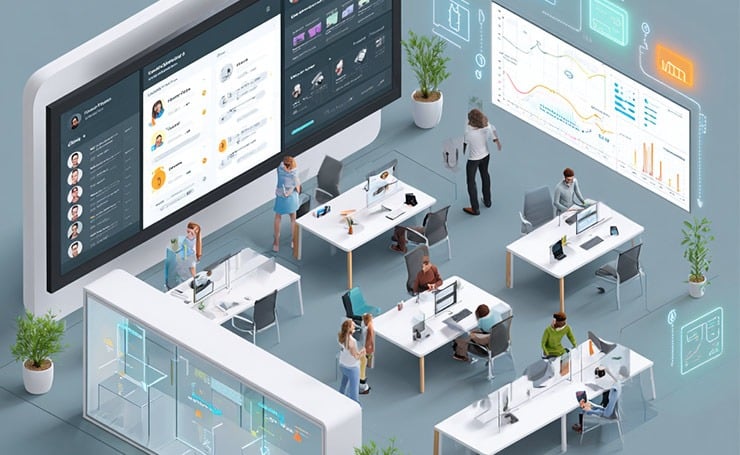
The software helps HR teams to store and manage employee data and track employees’ progress without manual processes. Such software also has a central hub that supports task and document management, time tracking, and compensation management.
Employee lifecycle management software also enhances employees’ experience. Instead of disjointed tasks, employees get a connected, intentional, and supportive experience. It ensures that from the first interaction to the last exit interview takes place professionally and with little stress.
Key Stages of the Employee Lifecycle
An employee lifecycle has different stages. Understanding them ensures you see where the software can help you the most.
Attraction

Attraction starts before the recruiting process. You build a reliable employer brand that makes professionals work for your organization. For a good employer brand, foster a good environment in the company and encourage your existing employees to leave good reviews. People read company reviews to decide whether they want to apply for the job or not.
Recruitment
After attracting an applicant pool, you need to narrow it down. You can use an applicant tracking system that shows if a candidate is the right fit for your company. Moreover, strive for diversity in the workplace. According to studies, diverse teams are more productive and creative than homogenous ones.
This is the stage where employees are expected to give interviews and show their experience through portfolios or the assignment or task assigned by the company. On the basis of the answers, the company selects the right candidate.
Onboarding
The onboarding process decides whether the new joiners stay or leave. According to expert staffers, onboarding should last for almost a year. Most new employees decide whether to stay or leave within the first six months.
Onboarding has 4 phases.
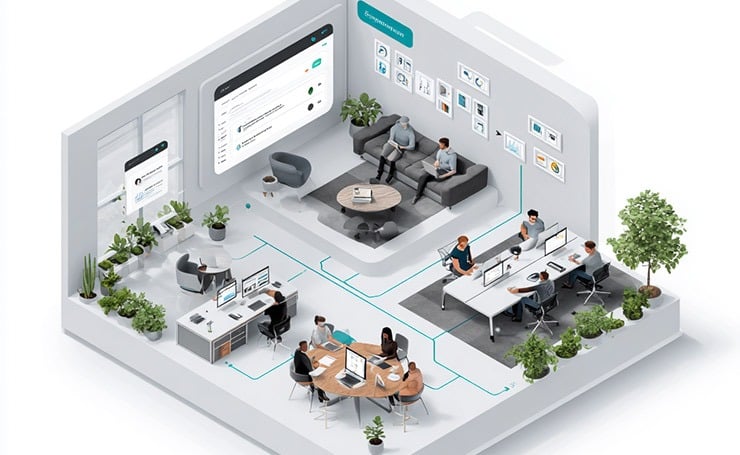
- Preboarding: Sending paperwork and welcoming new employees before their first day.
- Orientation: Introducing new hires to their team members, showing them the facility, and telling them about company culture.
- Training: Polishing job-specific skills through progressive weekly or monthly schedules.
- Integration: Providing regular constructive feedback and clear expectations as new employees settle into their roles.
Employee management software ensures that each phase properly supports the new hire.
Performance Growth
According to studies, companies that provide a structured training program generate 218% more income per employee than those that do not invest in employee training. Making employees more engaged in their work needs proper performance management. It will enable goal setting, skill development, and feedback cycles that ensure employees’ talent growth.
Engagement and Retention
Employees who are appreciated at work and feel cared for are 92% more likely to stay at your company. Staff who do not feel appreciated are 79% more likely to quit. Employees stay loyal when you acknowledge and appreciate their good work. Employee engagement tools gather feedback and identify the risk of churn before employees quit.
Compensation and Benefits

Compensation and benefits include competitive market salary, retirement plans, wellness programs, insurance, and leave policies. These make up for 70% of business costs. Therefore, you need an accurate benefit and compensation management tool for efficiency.
Offboarding
Your offboarding workflows include conducting exit interviews, welcoming former employees to your alumni network, and maintaining relationships that drive business growth even after employees leave.
Organizations lose about $15,000 per employee who leaves when they do not maintain alumni relations. Moreover, around 40% employees tend to rejoin their previous company. Therefore, having alumni relations and a proper offboarding system is crucial.
Core Features to Look For in an ELM Platform
An employee management platform offers many features, but here are some of the most important ones.
Workforce Planning
Workforce planning is an integral feature in an ELM tool. It helps companies support talent management by planning for future roles, identifying skill gaps, and building a strong and productive team.

One thing you need to ensure is that it meets all labor law requirements and has strong security features to protect employee data.
Time and Attendance Tracking
Time and attendance tracking is important because it boosts employee productivity. This feature does not just calculate when employees clock in or out. It also tracks overtime and paid time off, flags attendance issues that need attention, and integrates with payroll software.
This tool reduces time theft and scheduling issues and also ensures that every staff member gets fair compensation.
Self-Service Portals
Employee self-service portals allow your staff to update their personal details, request leave, access policy documents, and check pay stubs without needing to contact the HR team. Employees can save 300 labor hours per month through faster workflows that include self-service features.
Workflow Automation
Automation saves HR teams from a lot of manual tasks. For instance, it can mark a new team member as hired and set up their payroll, create an attendance record, assign tasks, and notify relevant departments.
You can use the software to automate onboarding, offboarding, payroll, and performance reviews based on specific triggers.
Real-Time Reporting and Analytics
Real-time reporting is necessary to convert raw employee data into powerful insights. HR can analyze turnover rates, headcount trends, performance, and compensation distribution in one unified system instead of consulting multiple sources.
Up-to-the-minute reporting and analytics show you retention risks, help you forecast hiring needs, and make the right decision for compensation management.
Performance Analysis
Performance management is a key feature that gives you insights into how your employees are working. Managers can track the team’s progress and leave performance reviews, allowing employees to self-assess and receive constructive feedback.

A performance management system also has modules for evaluating skills, setting goals, and tracking responsibilities, to help employees grow in an organization.
Mobile Accessibility
An ELM platform should be easily accessible through mobile phones. This results in productivity and efficiency, as employees can use it anytime, anywhere. They can handle administrative tasks, check their tasks, and complete any work-related activities from their mobile phone, which results in convenience and flexibility.
ELM Software vs. Standalone HR Tools: Which Is Better?
| Aspect | ELM Software (Employee Lifecycle Management) | Standalone HR Tools |
| Scope | End-to-end employee journey (hire, develop, retain, exit) | Focus on specific HR functions (e.g., payroll, ATS, performance) |
| Approach | Holistic, integrated system | Siloed, function-based tools |
| Data Flow | Centralized, connected across all lifecycle stages | Fragmented across multiple tools |
| User Experience | Consistent employee experience across stages | Disjointed experience between tools |
| Automation | Cross-stage workflows (e.g., onboarding, training, and performance) | Limited to individual tasks |
| Insights & Analytics | Advanced, lifecycle-wide insights (engagement, retention, growth) | Basic, tool-specific reporting |
| Flexibility | Less modular, more all-in-one | Highly modular (pick only what you need) |
| Implementation | More complex, requires setup and integration | Easier to adopt individually |
| Best For | Mid-to-large orgs needing strategic HR alignment | Small teams or specific HR needs |
| Cost Structure | Higher upfront, but replaces multiple tools | Lower initial cost, but it adds up with multiple tools |
Top Employee Lifecycle Management Software to Consider
Here are 5 ELM platforms to consider.
BambooHR
This tool is ideal for those HR teams that want to reduce manual work and transition to structured workflows.

One of its prominent features includes a built-in Application Tracking System (ATS). It funnels accepted candidates directly into New Hire Packets. These packets allow new hires to sign tax forms and provide direct deposit information before they join.
Best For: It is great for SMBs that need a clean user interface and quick implementation.
Pricing: It starts at around $10 per employee per month. The Advantage and Elite tiers have advanced analytics and performance management.
Workday
Workday combines HR and finance as a single data source. It is designed to deal with high-complexity environments with thousands of employees.
It uses an AI-driven “Skills Cloud” to identify skill gaps and suggest training paths to upskill employees. Moreover, it offers a “Sandbox” environment where HR leaders can model organizational restructures and massive job changes before implementing them live.
Best For: It is excellent for large multinational companies that need global compliance and deep predictive analysis.
Pricing: The starting price is a custom quote that depends on your organization’s needs.
Gusto
Gusto is a trusted platform for payroll and benefit management. It features “AutoPilot” payroll that runs automatically every cycle. It also provides the Gusto Wallet app, allowing employees to access their pay early or split deposits into savings goals.

Best For: It is great for small businesses and startups that need an all-in-one tool, including payroll, benefits, and HR compliance.
Pricing: Its Simple Plan starts at $49 per month base plus $6 per person. The Premium Tier provides access to certified HR experts.
HiBob
HiBob is more like a social network than a database. It is designed to maximize engagement for modern and fast-growing tech and creative teams.
It offers a social feed where employees can post shout-outs, join clubs based on their interests, and celebrate anniversaries. It uses a drag-and-drop workflow builder and provides Payroll Hub that syncs real-time people data with over 100 external payroll providers, such as Xero and ADP.
Best For: This platform is suitable for mid-sized companies with a hybrid or distributed workforce.
Pricing: The base plan requires a custom quote.
Lattice
It is not a core payroll tool. It is more like a specialized performance platform that usually sits on top of tools like Gusto or BambooHR.
It connects an employee’s goals to company-wide OKRs (Objectives and Key Results), so every team member can track their progress and see how their work is making an impact on the business’s success.
Best For: It is suitable for any company that wants to transition from rigid annual reviews to a high-performance and growth culture.
Pricing: Its performance modules pricing starts at $11 per user per month.
How to Choose the Right ELM Software for Your Business
Choosing the right ELM system should be done carefully because you are deciding on a system that will impact the employee lifecycle and all HR duties.
Evaluate Your HR Needs

Start by assessing what your HR team needs. Do you need help with performance management, or do you want to save time on employee data entry? Whatever your pain point is, it will become your anchor in choosing the right platform. Consult HR team members about what they need, and do not forget to include security as a vital feature.
Review Growth Potential and Scalability
The biggest mistake an organization makes when selecting an ELM platform is considering only its current needs. You should choose a system that grows with your business. Ask yourself whether the system you are selecting will scale as your employees grow and your business expands into new markets, without performance issues.
Look for cloud-based tools as they are flexible and easy to scale. You do not need to update it; the vendor handles it regularly, making it perfect for modern HR teams.
Compare Pricing
Always compare different tools and their pricing to select the one that is in your budget. Common pricing models include per-employee monthly fees, tiered pricing with advanced features, and custom quotes for complex workflows.

Additionally, calculate the total ownership cost apart from subscription fees. Implementation costs include data migration, training, and configuration. So, you need to calculate everything to understand the total cost.
Review Vendor Support
Review your vendor’s support because it is important during implementation and ongoing operation. Ask about the tool’s implementation timeline and training programs. Review whether they provide support through email, phone, or any other dedicated channel. Ask for references from customers who are active in your industry and run similarly sized companies. These will show you how the product performs.
Benefits of Using Employee Lifecycle Management Software
Improved Efficiency through Automation
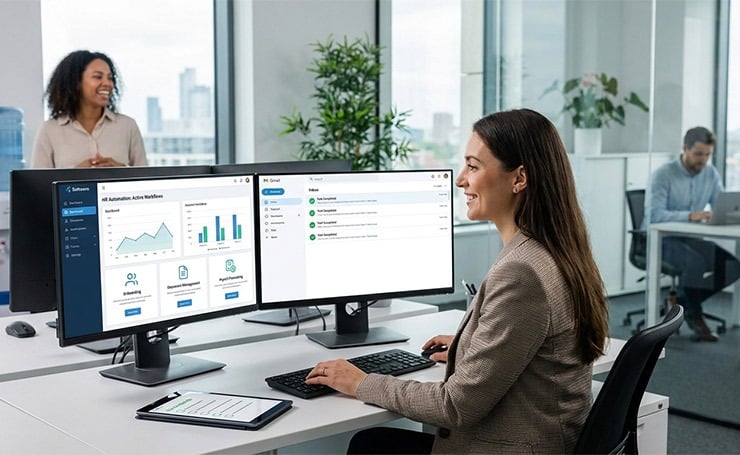
ELM platforms streamline administrative tasks, such as background checks, applicant tracking, document management, and payroll, reducing manual errors and saving HR teams’ time.
Enhanced Employee Experience and Engagement
ELM software offers self-service portals for employees. Team members can manage their own data, leaves, and attendance. It leads to higher morale and better communication.
Streamlined Onboarding and Offboarding
Another benefit is a smooth onboarding process, including proper IT, HR, and admin setup. HR staff can manage structured onboarding to ensure security and knowledge transfer.
Better Talent Retention
Employee lifecycle management software also offers various tools to set goals, provide performance feedback, and identify skill gaps. These insights help retain high-performing staff.
Data-Driven Decision Making
This software provides analytics and actionable insights into workforce trends to help HR make strategic decisions.
Robust Compliance and Security
ELM tools comply with labor laws and automate compliance logging to minimize legal risks and penalties.
Wrapping Up
With so many tasks at hand, HR teams benefit from using employee lifecycle management software. It provides automated workflows, payroll, performance management, analytics, employee data, and self-service portals in one unified channel.
Assess your HR workflows, choose the right tool, and train your HR staff to ensure their work becomes smooth and efficient.
Want to learn more about HR SaaS? Visit Latest SaaS Updates for more detailed blogs.
FAQs
What is Employee Lifecycle Management Software used for in HR?
Employee lifecycle management (ELM) software is used to manage hiring, onboarding, offboarding, and engagement in a single system. It helps HR teams streamline their tasks and improve employee experience.
What is the Difference between HRS and Employee Lifecycle Management Software?
ELM software focuses on the entire employee journey and experience. On the contrary, HRMS typically handles administrative functions like payroll, attendance, and employee records.
How does ELM software Improve Employee Retention Rates?
ELM software improves employee retention by providing performance tracking, engagement tools, data insights, and feedback systems that help identify and address employee concerns early.
What are the Benefits of Using ELM Software over Standalone HR Tools?
ELM software provides a centralized system with integrated workflows and analytics. On the other hand, standalone HR tools handle individual HR tasks but lack visibility into the employee lifecycle.
